
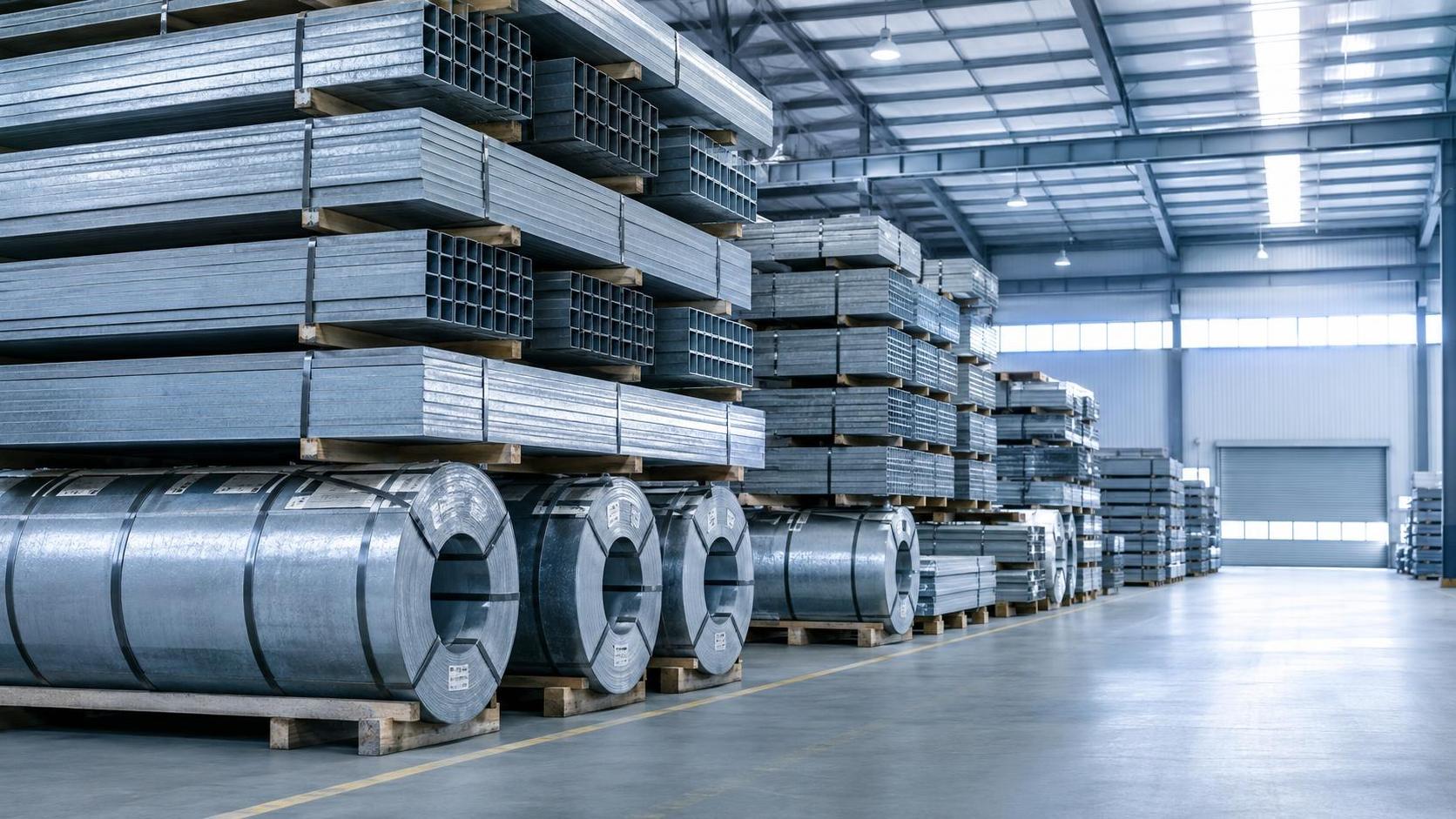
White rust can appear on galvanized steel surprisingly fast when moisture is trapped between sheets, coils, tubes, or stacked parts during storage. A delivery may arrive clean and bright, then develop a chalky white or gray film after a weekend of rain, a large temperature change, or storage on a damp floor. The issue is not simply that the material “got wet.” It occurs when zinc remains wet with limited air movement and cannot dry normally.
The practical answer is to keep Galvanized Steel dry, separated from standing water, and ventilated enough for any incidental moisture to escape. Store it under cover, keep it above the floor, create drainage paths in stacks, avoid sealed wet packaging, and inspect material after transport or condensation events. These measures reduce the conditions that allow zinc corrosion products to form between contacting surfaces.
Why white rust forms during storage
Galvanized coatings protect steel by using zinc as the outer protective layer. When zinc is exposed to ordinary air, it gradually develops a stable protective surface film. That natural film is less likely to form properly when freshly galvanized material is held wet for an extended period, particularly where water is trapped between closely contacting surfaces.
White rust is commonly called wet storage stain. It may look like a powdery white deposit, a dull white haze, or a heavier gray-white buildup. In early stages, it may be mostly superficial. If moisture remains trapped for longer periods, the reaction can consume more zinc and leave the coating rough, uneven, or locally reduced in thickness.
The highest-risk situation is a small, enclosed wet space. Examples include tightly nested pipe bundles, flat sheets stored directly on one another, coils exposed to condensation beneath wrapping, and fabricated components stacked while still wet. Rain is one source of moisture, but it is not the only one. Condensation, wet timber, wet forklift tires, wash water, leaks, high humidity, and contact with a damp concrete floor can all create the same problem.
The storage conditions that create trouble
Operators sometimes focus only on whether a warehouse has a roof. Covered storage helps, but a roof alone does not prevent white rust. A cold stack brought into a warmer humid building can sweat. Material placed under an impermeable cover can remain damp because moisture has no route to leave. A bundle may also be dry on the outside while water is retained in its lower layers.
Stack geometry matters as much as the building environment. Water follows gravity, but it can also be retained by capillary action in narrow gaps. Two wet sheets in close contact may stay wet much longer than a single sheet exposed to the same air. This is why apparently minor water ingress can become a serious issue in tightly packed material.
Start with the receiving area
Prevention begins before stock reaches its long-term storage position. Material that arrives after rain, sea transport, temperature changes, or outdoor waiting time should not be treated as automatically dry because the outer packaging appears intact. Check low points, lower bundle layers, sheet edges, coil eye areas, and the inside of protective covers. Look for water droplets, damp packaging, darkened timber bearers, or white marks near contact points.
When moisture is found, do not place the material into a closed stack and plan to inspect it later. Move it to a sheltered location where water can drain and surfaces can dry. Remove pooled water carefully. Open packaging where needed without creating a new exposure to rain or contamination. The goal is not to strip all protective packaging immediately; it is to prevent that packaging from becoming a moisture trap.
Dry bearers are important at this stage. Wooden supports can be useful, but they must be dry, clean, and positioned to support the load evenly. Wet or contaminated wood can transfer moisture and leave marks. Bearers should not block drainage paths, and they should be spaced appropriately to prevent sagging in long sheets or thin-gauge products.
Set up the storage area for drainage and airflow
A good storage arrangement gives water somewhere to go and allows air to reach the surfaces that are most likely to remain damp. Material should be elevated above the floor. This protects it from floor moisture, cleaning water, and splash from nearby traffic. It also makes it easier to see whether water has collected beneath a bundle.
Keep stored steel away from open doors, roof leaks, unprotected loading bays, wash-down areas, and locations where condensation drips from overhead pipes or roof structures. A warehouse can be generally dry but still have a few localized wet zones that repeatedly affect stock. Identifying these locations is often more useful than trying to control the humidity of an entire large building.
Airflow should be sufficient to dry incidental moisture, but uncontrolled outdoor air is not always helpful. During humid weather, moving warm moist air over cold galvanized surfaces can increase condensation. The better approach is sheltered storage with stable conditions and moderate ventilation. Avoid wrapping material so tightly that no air can circulate after a temperature change.
Stack sheets so water cannot remain between them
Flat products are vulnerable because their large surfaces can trap moisture. Whenever the product format and handling method allow, store stacks with a slight slope so water drains toward an accessible edge. The slope does not need to be dramatic; the important point is to avoid a level surface that becomes a shallow reservoir.
Use dry, compatible spacers when they are necessary for airflow or safe lifting. Place them in alignment from layer to layer so the load remains stable. Uneven spacer placement can distort sheets and create areas where water gathers. Do not use absorbent, wet, oily, or chemically contaminated packing materials. Any spacer that has been left outside in rain should be considered unsuitable until fully dry.
Where sheets are supplied in closely packed bundles, avoid repeatedly opening and restacking them unless there is a clear need. Excess handling can damage edges and introduce moisture. If a bundle has become wet, however, controlled separation for drying may be necessary. The decision depends on the amount of water present, how long it has likely been trapped, and whether the material can be safely handled without bending or scratching.
Pay attention to coils, tubes, and fabricated parts
Coils need protection from standing water around the outside diameter, inner diameter, and contact points with saddles. Store them on dry, stable supports that prevent rolling and keep the coil away from floor moisture. Protective wraps should shed external water but should not trap condensation indefinitely. If a coil has been exposed to significant moisture, inspect the coil eye and lower wraps rather than relying on the outer surface alone.
For galvanized tube, pipe, channels, and hollow fabrications, drainage is critical. Water can sit inside hollow sections even when the exterior looks dry. Store open-ended sections with an orientation that permits drainage where practical. Do not assume that a tight bundle will dry internally. If material was exposed to rain before bundling, water may remain at contact lines between members.
Fabricated items with pockets, overlaps, bolted joints, or nested shapes deserve the same attention. These details can hold water long after the surrounding surface has dried. Before stacking or covering fabricated parts, check corners, folds, recesses, and horizontal ledges. A simple change in orientation can prevent retained water from becoming a prolonged wet-storage condition.
Use covers correctly rather than relying on them blindly
Covers are useful for protecting galvanized stock from rain, dust, and splash, but they can cause problems when applied over wet material. A waterproof cover placed directly onto damp steel often creates a humid enclosure. The trapped moisture may then condense again as temperatures rise and fall.
Use covers as a roof, not as a sealed wet blanket. Leave a route for air movement beneath the cover while ensuring that rain cannot blow directly onto the material. Support the cover so water runs away instead of pooling on top. Do not allow it to sag into contact with the steel, because that contact point can retain moisture and abrade the surface during movement.
Packaging damaged during transport should be repaired or replaced before extended storage. Torn wrapping may allow rain in at the top while still restricting drying below. In that situation, simply adding more tape over the tear can make matters worse if water is already inside. Inspect first, dry the stock if required, then restore protection.
A practical response when material gets wet
Fast action limits the chance of visible staining and coating loss. The response should focus on drying, drainage, and inspection rather than on immediately applying chemicals or abrasive cleaning.
- Stop further water exposure. Move the material under cover or correct the leak, splash source, or condensation source.
- Check where water is retained. Inspect lower layers, overlaps, bundle centers, coil eyes, and hollow sections.
- Drain and separate as needed. Adjust the stack, open wet packaging, or use spacers where this can be done safely.
- Allow surfaces to dry naturally with ventilation. Avoid heating methods that could create uneven temperatures or drive moisture deeper into packed layers.
- Inspect after drying. Identify whether the deposit is light and superficial or heavy, adherent, and associated with roughened zinc.
Do not use aggressive wire brushing, grinding, or strong chemicals as a routine answer to white rust. These methods can remove sound zinc along with corrosion products and may leave an uneven appearance. Light deposits may be assessed after drying and, where appropriate, removed using gentle methods that do not damage the coating. Heavier staining, roughness, or suspected coating loss should be evaluated against the material’s intended service conditions and any applicable project requirements.
Distinguish a cosmetic mark from a coating concern
Not every white mark means that galvanized steel has lost its protective function. Light, thin, powdery staining may be largely superficial, especially when detected early. Even so, it should not be ignored, because its presence confirms that the storage environment allowed prolonged wetness.
More concern is warranted when the affected area is thick, uneven, dark gray beneath the white deposit, rough to the touch, or concentrated in zones where water was clearly trapped. Inspect edges, corners, and the bottom of stacks because these areas may remain wet longest. Where coating condition is important for a corrosive service environment, do not make acceptance decisions based only on appearance from a distance. The relevant question is whether the zinc coating has been materially affected, not merely whether the original shine has changed.
Small habits that prevent repeat problems
White rust prevention works best when storage checks are tied to routine handling. After a rain event, roof leak, delivery delay, or large temperature swing, inspect vulnerable stock rather than waiting for the next issue report. Keep floor drains clear. Remove wet packaging materials from the storage area. Return bearers and spacers indoors after use so they do not become a hidden source of moisture.
It also helps to avoid mixing dry incoming stock with material that is already wet or suspected of being wet. A damp bundle placed against clean, tightly packed stock can transfer moisture into a much larger area. Separate questionable material until it has been checked and dried.
Questions that often come up in storage areas
Can galvanized steel be stored outdoors?
Short-term outdoor storage may sometimes be unavoidable, but it carries greater risk because rain, dew, temperature changes, and poor drainage are harder to control. Use elevated supports, a properly supported weather cover, drainage space, and regular inspection. Long-term storage is safer in a dry, sheltered environment.
Will a plastic wrap always prevent white rust?
No. Plastic can keep rain out, but it can also retain water and condensation inside. Its effectiveness depends on whether the material was dry before wrapping, whether the wrap remains intact, and whether moisture has a route to escape after temperature changes.
Should wet galvanized material be dried with compressed air?
Compressed air can help remove water from accessible crevices when the air supply is clean and dry, but it does not replace proper drainage and ventilation. It may also fail to reach the middle of tight bundles or between stacked sheets. Avoid blowing contaminated air, oil, or dirt onto the zinc surface.
Get real-time quotes
Interested? Leave your contact details.